26 November 2026
How to Choose a Niagara Falls Day Trip That Fits Your Time and Interests
Presented by @theniagarafallsdaytournews
Picking a day trip to Niagara Falls is less about finding the biggest itinerary and more about matching the day to your pace. The area can be explored from several angles: the Canadian side, the American side, the river above the falls, the caves and tunnels near the plunge pools, and the quieter stretches along the Niagara Parkway. A good plan makes the falls feel vivid without turning the day into a rushed sequence of stops.
Start with the side of the river you want to focus on. The Canadian side is known for broad views of Horseshoe Falls, busy viewpoint areas, and a dense cluster of attractions near Table Rock Welcome Centre. The American side offers a different perspective, with close views around Bridal Veil Falls and access to the Niagara Falls State Park area. Both sides can be rewarding. The right choice depends on whether you want classic panoramic views, a quieter pace, or a mix of both.
Set the shape of the day first
Before comparing attractions, decide how much structure you want. Some visitors prefer a loose day built around viewpoints and short walks. Others like a set route that includes major stops, transport, and timed activities. A niagara falls day tour can be useful when the priority is seeing several highlights without solving every transfer on the spot, while independent planning gives more freedom to linger at one viewpoint or skip a busy stop.
Think about arrival and departure times. A short visit calls for a tight focus, usually the main falls viewpoints and one signature attraction. A longer day leaves room for a river cruise, a walk along the Niagara Parkway, or time for lunch with a view. Do not fill every hour. Queues, weather, road conditions, and simple walking time can stretch a plan, especially in peak season.

Also consider who is travelling. Children may enjoy boat rides and open spaces, while older travellers may prefer shorter walks, frequent seating, and fewer steep stairs. If mobility is a concern, check whether each stop can be reached without long steps or uneven paths. A plan that looks compact on a map can still involve a fair amount of walking.
Choose the views that matter most
Niagara Falls is not one single view. The main drops, the river, the mist, and the surrounding cliffs each offer a different experience. Decide which images you want to remember before adding extra stops.
- Choose Horseshoe Falls if you want the wide, iconic curve and the strongest sense of scale.
- Add Journey Behind the Falls if being close to the water and hearing the roar from below matters to you.
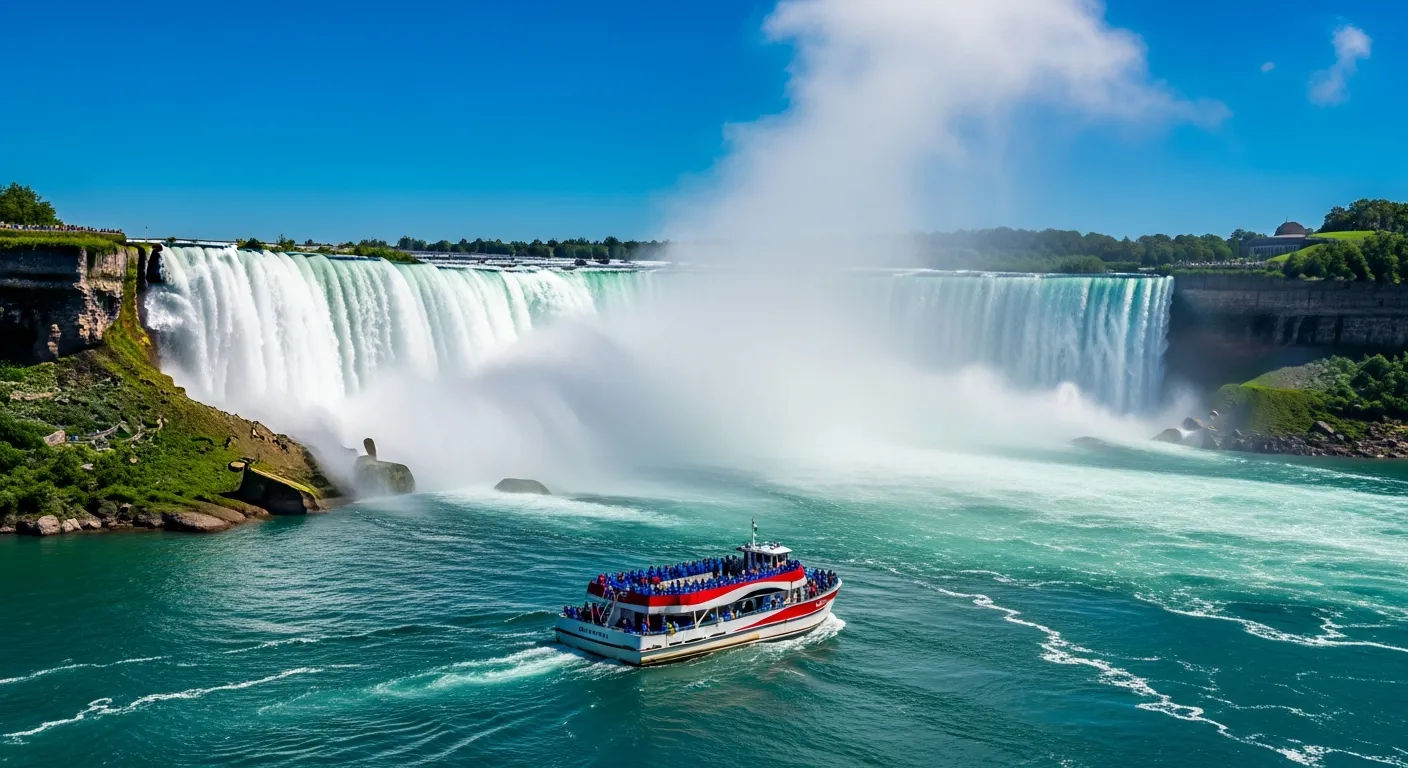
- Include Maid of the Mist if a boat approach on the river feels like a highlight, with the understanding that spray and seasonal conditions affect the experience.
- Allow time at Table Rock Welcome Centre if you want an easy starting point near major Canadian-side viewpoints and visitor facilities.
- Leave space for the Niagara Parkway if you enjoy river views, gardens, and a slower stretch away from the busiest overlooks.
Each of these choices has a trade-off. Boat and tunnel attractions are memorable, but they can involve lines, wet clothing, stairs, and fixed operating times. Viewpoint-only plans are simpler and easier to adjust. If the weather turns, open viewpoints still work in light rain, though mist can reduce clarity. In brighter conditions, later afternoon light often flatters photos, but popular overlooks can be crowded.
Match the itinerary to your travel style
Read the route carefully, not just the list of attractions. Look at the order of stops and how much time is allowed at each one. A day that includes every famous name may still feel thin if the schedule gives only a few minutes at the main falls. On the other hand, a shorter route with generous time at two or three places often feels more satisfying.
Check whether the day is mostly outdoors, mostly structured, or a blend. Some routes focus on the falls and nearby attractions, while others add wineries, historic areas, or river landmarks such as Whirlpool Aero Car. Extra stops can be worthwhile if they suit your interests, but they also reduce time at the water. If the falls are the reason for the trip, protect the central viewing time first.
Transport is another practical filter. Ask how you move between stops, whether pickup and drop-off points are clear, and how much walking is expected between them. A route that starts near the falls may be easy for visitors already staying nearby. Travellers arriving from a farther base need to think about the first and last leg of the day, not only the itinerary in the middle.
Group size can change the feel of the outing. Smaller groups tend to move with more flexibility, while larger groups can feel more organized but less spontaneous. Neither is automatically better. The question is whether you want a steady rhythm with clear direction or more room to wander and make small changes during the day.
Check timing, season, and conditions
Niagara Falls changes with the season. Summer brings longer operating hours and more activity, along with heavier crowds. Spring and autumn can be pleasant for walking and photography, though some attractions may run on reduced schedules. Winter has a stark beauty, but icy paths and limited access can affect plans. Always check what is open for the date you have in mind instead of assuming the full range of attractions will be available.
Weather deserves more than a quick glance. Mist can soak clothing near the falls, and wind can make the spray feel colder than the temperature suggests. A light waterproof layer is useful even on a dry-looking day. Comfortable shoes matter too, since many viewpoints involve paved paths, slopes, steps, or repeated short walks.
A well-matched niagara falls day tour should leave room for the unexpected, such as a viewpoint that holds your attention longer than planned or a short pause when the mist clears. If the schedule is packed to the minute, small delays can affect the rest of the day. Look for a plan with sensible buffers, especially if it includes boat rides, tunnel attractions, or timed entries.
Read the details before committing
The best choice is usually clear once the practical details are lined up. Check what is included and what is left open. Meals, attraction entries, transport between stops, and free time should be easy to understand before you commit. Vague wording can hide a day that is either too sparse or too crowded.
Look closely at cancellation terms, meeting arrangements, and any age or mobility notes. These details are not exciting, but they prevent avoidable problems. If a plan involves multiple stops across the river, confirm which side you start and finish on. Crossing borders can add time, so a route that looks short on paper may take longer in practice.
Finally, compare the plan with your reason for going. If you want spectacle, keep the main falls viewpoints central. If you want variety, add one or two contrasting stops rather than a long list. If you want quiet, favour the Niagara Glen Nature Reserve or a slower river walk over the busiest viewing platforms. The right day is not the one with the most stops. It is the one that gives you enough time to actually see the falls, absorb the scale of the water, and move between places without feeling hurried.